Voltage Drop on Long EV Charger Runs
When a detached garage pushes the run past 100 ft, upsizing the conductor keeps the drop under 3%. The formula, worked examples for 32, 40 and 48 A chargers, and the ground-size catch.

The EV Charger Calc team
Nov 18, 2026 · 3 min read
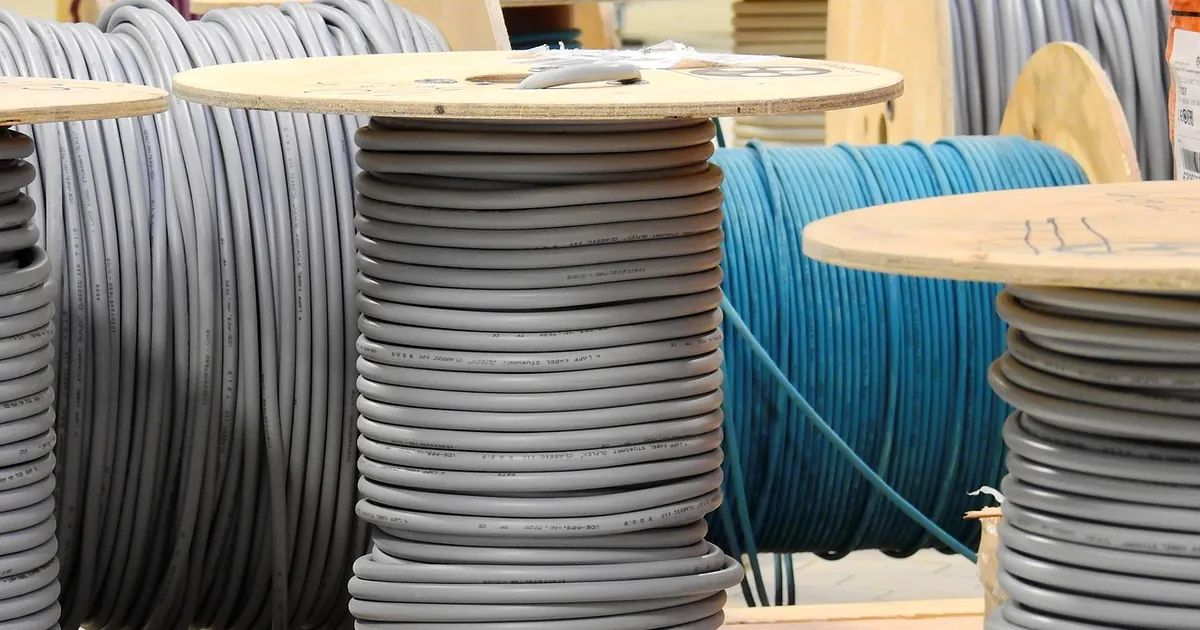
Most EV charger circuits are short: panel in the garage, charger on the next wall. Voltage drop never comes into it. But a detached garage, a charger at the far end of a driveway or a panel on the other side of the house can push the run past 100 ft, and that's where the conductor that's big enough for ampacity stops being big enough for voltage.
The formula
For a single-phase circuit:
VD = 2 × K × I × L ÷ CM
- K: resistivity of the conductor, about 12.9 ohm-circular mils per foot for copper and 21.2 for aluminum.
- I: the load in amps, the charger's rating (48 A for a 48 A charger), not the 125% circuit size.
- L: one-way length in feet, panel to charger.
- CM: the conductor's area in circular mils, from NEC Chapter 9, Table 8 (6 AWG = 26,240 cmil; 4 AWG = 41,740; 3 AWG = 52,620; 2 AWG = 66,360).
Divide VD by the circuit voltage for the percent.
How much is too much?
The NEC's informational note to 210.19 recommends no more than 3% on a branch circuit and 5% for feeder and branch circuit combined. It isn't a requirement, but a charger at 228 V instead of 240 V delivers about 5% less power, so it's worth holding to.
Worked example: 48 A, 6 AWG copper, 240 V
At 85 ft:
VD = 2 × 12.9 × 48 × 85 ÷ 26,240 = 4.0 V, or 1.7%. Fine.
At 175 ft:
VD = 2 × 12.9 × 48 × 175 ÷ 26,240 = 8.3 V, or 3.4%. Over.
Moving to 4 AWG copper: VD = 2 × 12.9 × 48 × 175 ÷ 41,740 = 5.2 V, or 2.2%. Back under 3%.
When to upsize: quick table
The longest one-way run that stays at or under 3% at 240 V, copper conductors:
| Charger | Circuit | Ampacity size (Cu 75 °C) | Max run at 3% | Next size up | Max run at 3% |
|---|---|---|---|---|---|
| 32 A | 40 A | 8 AWG | about 140 ft | 6 AWG | about 225 ft |
| 40 A | 50 A | 8 AWG | about 115 ft | 6 AWG | about 180 ft |
| 48 A | 60 A | 6 AWG | about 150 ft | 4 AWG | about 240 ft |
| 64 A | 80 A | 4 AWG | about 180 ft | 3 AWG | about 230 ft |
At 208 V, the same drop in volts is a bigger share, so the maximum runs are about 13% shorter. Our free voltage drop calculator works it out for any load, voltage, length and size, and shows the smallest size that stays under 3%.
The ground-size catch
If you upsize the circuit conductors for voltage drop, 250.122(B) requires the equipment grounding conductor to be increased in proportion to the circular mil area.
Example: a 32 A charger on a 40 A circuit normally uses 8 AWG copper with a 10 AWG copper ground (Table 250.122). On a 200 ft run you go up to 6 AWG for drop: 26,240 ÷ 16,510 = a ratio of 1.59. The ground goes from 10 AWG (10,380 cmil) to at least 10,380 × 1.59 = 16,500 cmil, which is 8 AWG (16,510 cmil).
Cable assemblies like NM-B come with a ground sized for the cable, which usually satisfies this. With individual conductors in conduit, size it yourself.
Other things that change on a long run
- Terminal size. Some chargers and breakers only accept up to a certain conductor size. A 2 AWG conductor may not fit a 60 A breaker's lug. Check the manual, and plan a splice or pull box near the charger if needed, with listed reducing connectors.
- Aluminum feeders. For long runs to a detached garage, an aluminum feeder to a subpanel is often cheaper than a long copper branch circuit, and gives room for other loads in the garage. Aluminum needs a bigger size for the same drop (K = 21.2).
- Conduit fill. Bigger conductors may need bigger conduit. Check Chapter 9 fill before you buy.
- Underground runs. Use conductors rated for wet locations (THWN-2, XHHW-2 or UF-B) and the burial depths in Table 300.5.
Size for ampacity first
Voltage drop only ever makes a conductor bigger. Always start from the ampacity size for the 125% continuous load, then check the drop. The free wire and breaker size calculator gives the breaker, conductor and ground in one go.
The EV Charger Calc app runs ampacity, voltage drop and conduit fill for the same job and carries the results into a PDF quote for your customer.
Frequently asked questions
Is the 3% voltage drop limit a code requirement?
No. It comes from informational notes in the NEC (210.19 for branch circuits), which recommend 3% on a branch circuit and 5% total. Informational notes aren't enforceable, but they're good practice, and some local codes and engineers require them.
Do I use the breaker size or the charger amps for voltage drop?
The charger amps. The 125% rule sizes the circuit for heat; the drop depends on the current that actually flows, which is the charger's rating or setting.
If I upsize the wire for voltage drop, do I upsize the ground?
Yes. 250.122(B) says that when ungrounded conductors are increased in size for any reason other than ampacity, the equipment grounding conductor is increased in proportion to their circular mil area.
What happens if the drop is too high?
The charger gets less voltage, so it delivers less power and charges slower. Wire and terminations also run warmer, and some chargers flag low-voltage faults.