What Size Breaker Do I Need for an EV Charger?
The 125% continuous load rule in one table, from 16 A to 80 A chargers, plus GFCI, the individual branch circuit rule, disconnects and adjustable chargers.

The EV Charger Calc team
Nov 20, 2026 · 3 min read
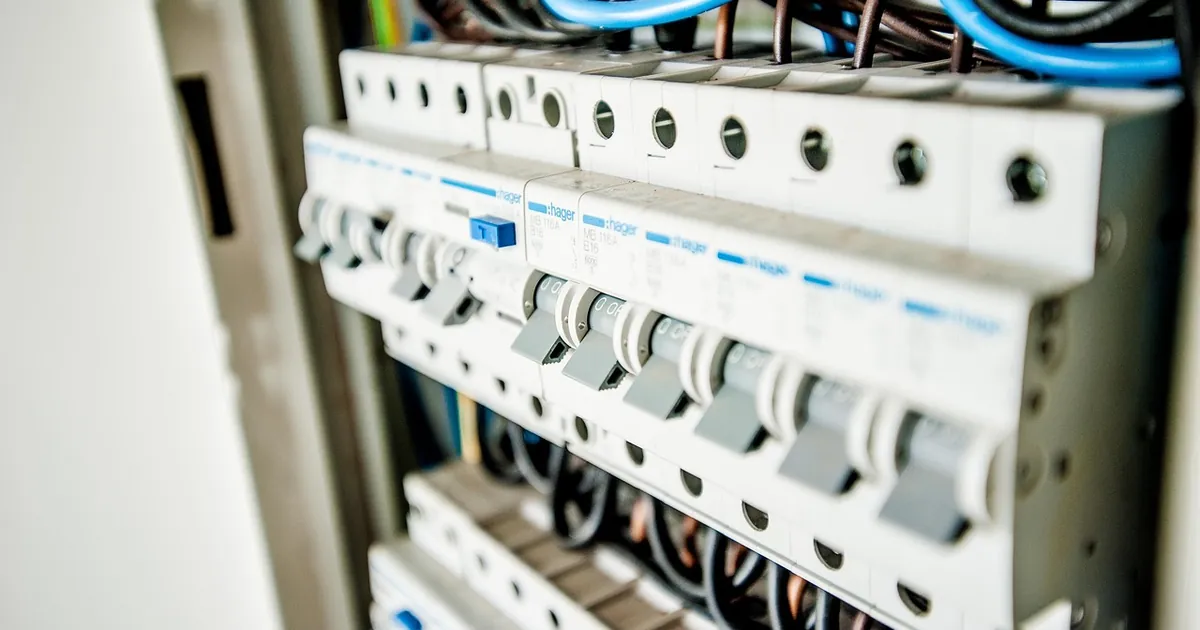
The breaker for an EV charger comes from one rule. Everything else (the wire, the ground, the panel load) follows from it, so it's worth getting right first.
The rule: 125% of the charger's rating
NEC 625.41 says the overcurrent protection for EV supply equipment must be sized for continuous duty, at not less than 125% of the maximum load of the equipment. A charger can draw its full current for hours, and breakers and conductors are only good for 80% of their rating under that kind of load.
So: charger amps × 1.25, rounded up to the next standard breaker size in 240.6(A).
EV charger breaker size table
| Charger rating | × 1.25 | Breaker | Typical copper wire (THHN, 75 °C) |
|---|---|---|---|
| 16 A | 20 A | 20 A | 12 AWG |
| 24 A | 30 A | 30 A | 10 AWG |
| 32 A | 40 A | 40 A | 8 AWG |
| 40 A | 50 A | 50 A | 8 AWG |
| 48 A | 60 A | 60 A | 6 AWG |
| 64 A | 80 A | 80 A | 4 AWG |
| 80 A | 100 A | 100 A | 3 AWG |
For 240 V chargers it's a two-pole breaker. The wire column assumes copper THHN/THWN-2 in conduit with 75 °C terminals at both ends; NM-B cable is limited to the 60 °C column and often needs one size larger. Our free wire and breaker size calculator gives the conductor and ground for copper or aluminum, conduit or cable.
Adjustable chargers
Most Level 2 chargers can be set below their maximum, usually with DIP switches, a dial or an app during installation. Under 625.42, if the adjusting means has restricted access (behind a cover, a password, or a tool), the charger's rating is the setting, and the circuit can be sized for it.
That's how you fit a 48 A-capable charger on an existing 40 A circuit: set it to 32 A. It's also the first thing to try when the panel is tight; a 32 A setting still adds about 25–30 miles of range per hour for most cars.
Plug-in chargers
A charger that plugs into a receptacle is limited by the receptacle. Under 625.44, cord-and-plug-connected stationary equipment can use a receptacle of up to 50 A, and on a 50 A circuit the charger can draw at most 40 A. That's why plug-in chargers top out at 40 A, and why a 48 A charger has to be hardwired.
625.54 requires GFCI protection for personnel on all receptacles installed for EV charging. In practice that means a two-pole GFCI breaker for a NEMA 14-50 or 6-50 receptacle.
Other rules that come with the breaker
- Individual branch circuit (625.40): each EV charging outlet gets its own circuit with no other outlets.
- Disconnect (625.43): equipment rated more than 60 A or more than 150 V to ground needs a disconnecting means in a readily accessible location. If it is out of sight of the charger, it must be lockable in the open position (110.25). A 48 A charger on 240 V doesn't need one; a 64 A or 80 A charger does.
- Outdoor outlets (210.8(F)): GFCI protection is required for outdoor outlets on dwellings supplied by single-phase circuits of 150 V or less to ground and 50 A or less. Check how your jurisdiction applies it to hardwired chargers.
- Panel compatibility: use a breaker listed for the panel. Mixing brands with "fits" breakers can void the listing.
Check the panel and the run
The breaker size is the start, not the end:
- Will the panel carry it? A 60 A breaker adds 11,520 VA of load at 240 V. Run the EV charger load calculator (NEC 220.82) before you promise anything.
- Is the run long? Past about 100 ft, voltage drop may push the conductor up a size. See voltage drop on long EV charger runs.
- What does the manual say? Chargers list the breaker they expect, and some have terminal size limits.
The EV Charger Calc app does the breaker, wire, voltage drop and panel load for the same job, then turns it into a PDF quote.
Frequently asked questions
What size breaker for a 48 amp EV charger?
60 A, two-pole. 48 A × 1.25 = 60 A, which is a standard breaker size.
Can I put a 48 A charger on a 50 A breaker?
No. A 50 A circuit can carry a continuous load of only 40 A. Set the charger to 40 A or less, or run a 60 A circuit with conductors sized for it.
Does an EV charger need a GFCI breaker?
If it plugs into a receptacle, yes: 625.54 requires GFCI protection for personnel on all receptacles installed for EV charging. Hardwired chargers have built-in protection, but check 210.8(F) for outdoor outlets on dwellings and your local amendments.
Can an EV charger share a circuit?
No. 625.40 requires each outlet for EV charging to be on an individual branch circuit with no other outlets. Listed power-sharing systems that split one circuit between chargers are a separate, permitted case.